

ABSTRACT
The landscape of healthcare is increasingly reliant on data-driven insights to make informed decisions and enhance patient outcomes. Health informatics researchers and healthcare providers are confronted with the challenge of managing vast amounts of data dispersed across various systems. The pivotal issue lies in the unification of data from these disparate sources to unlock the potential for knowledge discovery. Data warehousing presents a compelling solution.
This paper delves into the promising prospects and intricacies of health data warehousing and mining. It spotlights a data warehousing model meticulously tailored for harmonizing data from diverse healthcare sources to unearth actionable insights that can optimize patient treatment and healthcare resource allocation.
In general, healthcare institutions amass a wealth of data within a multitude of health information systems. Realizing the untapped potential of this vast medical data necessitates national-level integration. However, this integration process hinges on linking patient records across heterogeneous sources. To facilitate effective data mining, it is imperative to preserve record linkage in health data warehousing by retaining identifiable attributes.
Yet, identifiable health data poses a significant risk to patient privacy and amplify vulnerability to cyber threats. This paper furnishes a practical solution to address the healthcare resource optimization and patient treatment optimization concerns through development of a data warehouse. The devised technique anonymizes identifiable patient data while upholding record linkage, thereby expediting the knowledge discovery process. The system employs encrypted mobile numbers, gender, and name-values of patients to generate a Patient Identification Key, ensuring the protection of sensitive health data in the national health data warehouse.
In contemporary settings, enterprises and hospitals rely heavily on data, which is managed through database servers. The challenge lies in efficiently handling clinical data, expediting the retrieval of patient records. This paper advocates the use of data mining techniques to address this challenge and introduces the Medical Information System, designed for the seamless management of daily patient records. These databases play a pivotal role in the day-to-day clinical data operations of hospitals.
Amidst the growing competition in the market, data mining and warehousing concepts are gaining traction, enabling the analysis of clinical data to derive innovative techniques for streamlining routine hospital operations. The proposed methodology outlines the construction of a data warehouse for a medical information system using data mining techniques. This data warehouse leverages an informational database, engineered through the transformation of operational databases.
Data analysts can harness this system to analyze data and make informed decisions. Moreover, the system facilitates suggestions and predictions related to diseases, all underpinned by data-driven insights. The introduction of a clinical data warehouse model, rooted in data mining techniques, augments the overall system, poised to serve as a robust data repository for the medical information system.
This abstract encapsulates the multifaceted dimensions of data warehousing in healthcare, encompassing the intricacies of integration, privacy, and the transformative potential of data mining techniques.
INTRODUCTION
In an era characterized by an overwhelming influx of data, the healthcare industry stands on the cusp of a profound transformation. The monumental challenge faced by healthcare providers, researchers, and policymakers is the effective utilization of this ever-expanding wealth of healthcare data. Amidst this sea of information lie the keys to improving patient treatment, optimizing the allocation of healthcare resources, and ultimately enhancing the quality of care provided.
The concept of healthcare resource optimization and patient treatment optimization is not only paramount for improving patient outcomes but also for addressing the economic and logistical challenges faced by healthcare institutions worldwide. In the pursuit of these goals, the role of data warehouses emerges as a pivotal enabler. These repositories of integrated, cleansed, and transformed data offer the promise of transforming raw information into actionable insights.
This research embarks on an exploratory journey into the realm of data warehousing for healthcare, aimed at optimizing the allocation of healthcare resources and improving patient treatment. The scope is vast, spanning diverse aspects of healthcare, from clinical operations to patient care. At its core, this study endeavors to unveil the immense potential harbored within the data generated by healthcare institutions, and the transformative power of data warehousing in realizing this potential.
The following sections of this research will delve deeper into the multifaceted landscape of healthcare data warehousing. We will explore the challenges and complexities encountered in the amalgamation of data from disparate sources, the critical issue of patient privacy and data security, and the application of data mining techniques to unearth invaluable insights. Through this journey, we aim to contribute to the growing body of knowledge in the field of healthcare informatics, all in the pursuit of better, more efficient, and more patient-centric healthcare systems.
This research seeks to be a guiding light for healthcare professionals, data scientists, and policymakers looking to harness the power of data to drive change and innovation in healthcare. The future of healthcare is data-driven, and this study aims to illuminate the path forward for an industry that holds the key to the health and well-being of millions.
LITERATURE REVIEW
The healthcare landscape is undergoing a profound transformation, largely driven by the digitization of medical records and the proliferation of health data. This transformation has spurred an increasing reliance on data-driven decision-making in the healthcare industry. Within this context, the concept of healthcare resource optimization and patient treatment optimization is becoming a focal point of interest for researchers, healthcare providers, and policymakers. It is essential to explore the existing body of knowledge to comprehend the current state of affairs and the avenues of advancement in this critical domain.
The healthcare industry is awash with data from diverse sources, including electronic health records, diagnostic imaging, wearable devices, and patient-reported outcomes. This abundance of data is both an opportunity and a challenge. Effectively harnessing this data can lead to improved patient outcomes, better allocation of resources, and more efficient healthcare systems. However, the complexities involved in aggregating, analyzing, and deriving meaningful insights from these diverse datasets are considerable.
This literature review embarks on a journey through the existing research and knowledge pertaining to data warehousing for healthcare resource optimization and patient treatment enhancement. It aims to provide a comprehensive overview of the current state of data warehousing in healthcare and the strategies employed to optimize resource allocation and enhance patient treatment.
As we delve into this literature review, we aim to gain a comprehensive understanding of the current research landscape, identify gaps in knowledge, and pave the way for the forthcoming research that will contribute to the advancement of healthcare resource optimization and patient treatment enhancement through data warehousing. The insights gathered from this exploration will serve as a cornerstone for the subsequent phases of this research, providing a solid foundation upon which to build innovative solutions for the healthcare challenges of today and tomorrow.
RELATED WORK
Data warehousing
Data warehousing in the context of healthcare is a critical component of the broader healthcare information management landscape. It plays a fundamental role in organizing, storing, and making sense of the vast amount of data generated within the healthcare ecosystem. Here’s an expansion on data warehousing in healthcare for your research.
A data warehouse in healthcare is an integrated repository that consolidates data from various sources, including hospitals, clinics, labs, and more. In the proposed design, data mining techniques are applied to existing healthcare databases. After data mining, the data is transformed into a data warehouse, which is cleaned and made noiseless. This clinical data warehouse becomes a valuable resource for various medical information system tasks.
Data Warehousing in Healthcare
- Integration of Textual Data
Healthcare data isn’t solely structured and numerical; a significant portion of it is unstructured and textual. This unstructured text data includes clinical notes, medical reports, patient records, and other narrative documents. The integration of textual data into a healthcare data warehouse is a crucial step. It involves transforming these narratives into structured and analyzable information. Various natural language processing (NLP) techniques can be applied to extract insights from this unstructured data.
- Data Sources in Healthcare
Healthcare data warehouses pull data from diverse sources, including hospitals, clinics, physician offices, laboratories, radiology departments, and more. Each of these sources may maintain data in different formats and use unique terminologies. Data integration and standardization are essential to make these varied data sources compatible within the data warehouse.
- Clinical Disciplines and Terminology
Healthcare practitioners from different clinical disciplines, such as pediatrics, cardiology, and orthopedics, employ domain-specific terminology. The data warehouse should be capable of mapping and translating these different clinical languages into a common structure. This facilitates cross-disciplinary research and analysis.
- Data Authorship
Healthcare data is authored by professionals with varying levels of expertise, from physicians and nurses to technicians and administrative staff. The data warehouse must preserve and reflect the authorship of the data, as this information can be vital for clinical assessments, auditing, and research.
- Supporting Decision-Making
The primary purpose of the data warehouse, empowered by data mining, is to support decision- making in the healthcare sector. It enables healthcare professionals and researchers to make informed choices by providing insights into patient outcomes, disease patterns, and resource utilization. For resource optimization and treatment analysis, data mining can identify the most effective approaches and areas for improvement.
Data Mining in Healthcare for Data Warehouse and Resource Optimization
Data mining in the healthcare sector is a critical component of healthcare resource optimization and patient treatment analysis. It involves the use of advanced techniques, including neural networks, statistical tools, machine learning, and artificial intelligence, to extract valuable insights from vast and complex healthcare datasets. Here’s a comprehensive discussion of data mining’s role in healthcare for your research
- Dealing with Large Healthcare Datasets
- Healthcare generates vast amounts of data, including patient records, medical imaging, clinical notes, and more. When the data is exceptionally large, as is often the case in healthcare, data mining techniques are used to manage and extract insights from these massive datasets.
- Clustering techniques, as mentioned in your provided information, are employed to segment the data into smaller, more manageable and homogenous groups. This segmentation can be useful for resource allocation and treatment optimization [22].
- Descriptive and Predictive Data Mining in Healthcare
- Data mining in healthcare encompasses both descriptive and predictive tasks. Descriptive data mining aims to find interesting patterns or clusters in the data. This is achieved through techniques like association rule learning and clustering.
- Predictive data mining starts with the entire dataset and focuses on creating predictive models that can be used for making future predictions or classifications. For instance, these models can assist in predicting patient outcomes and personalizing treatment strategies [7].
- Patient Record Linkage and Privacy Concerns
- Effective data mining in healthcare often necessitates the linkage of patient records from different sources. This integration process is vital for creating comprehensive patient profiles. To maintain record linkage, identifiable attributes are retained. However, this practice raises significant privacy concerns, as identifiable health data can put patient privacy at risk and make data vulnerable to cyberattacks. Safeguarding patient data privacy while enabling effective data mining is a crucial challenge in healthcare.
- Data Mining Techniques
Exploring the application of data mining techniques within healthcare data warehousing, such as predictive modeling, clustering, and anomaly detection, to derive actionable insights.
In summary, data mining, supported by data warehousing, is a cornerstone of healthcare resource optimization and patient treatment analysis. It empowers healthcare professionals and decision-makers to extract valuable insights, identify patterns, and optimize resource allocation. However, the ethical and privacy considerations surrounding patient data are of paramount importance, and healthcare organizations must ensure robust data security measures while leveraging data mining techniques for better patient care and resource management.
Resource Optimization in Healthcare
Efficient resource allocation is critical in healthcare to ensure the availability of the right resources, such as staff, beds, and medical equipment, when and where they are needed. Here are key points to consider for your research on resource optimization in healthcare using data warehousing and analytics
- Staff Allocation
- Data warehousing can integrate workforce data, including the skills, availability, and historical performance of healthcare staff. Analytics can then be applied to optimize staff allocation based on patient needs and historical patterns.
- Machine learning models can help forecast patient admission rates, which aids in the scheduling of nursing shifts and the allocation of personnel to various departments based on expected demand.
- Bed Management
- Data analytics can be used to create bed occupancy models that predict patient flow and occupancy patterns within hospitals. This information helps hospitals allocate and manage beds efficiently.
- Real-time monitoring of bed occupancy, combined with historical data, allows healthcare facilities to optimize patient admission and discharge processes, reducing wait times and enhancing patient flow.
- Medical Equipment Utilization
- Data warehousing can store data on the usage and maintenance history of medical equipment. Analytics can then identify equipment utilization patterns and suggest optimal maintenance schedules to reduce downtime.
- Predictive analytics can help forecast equipment needs, ensuring that hospitals have the right equipment available when needed, reducing wait times for diagnostic tests or procedures.
- Cost Reduction
- Data-driven resource optimization not only improves patient care but also reduces operational costs. By using data warehousing and analytics to optimize staff, bed, and equipment utilization, healthcare facilities can minimize unnecessary expenses.
Patient Treatment Optimization
Enhancing patient outcomes and providing personalized treatment plans are at the core of patient treatment optimization. Here’s how data warehousing and analytics can contribute to this aspect of healthcare research.
- Personalized Treatment Plans
- Data warehousing aggregates patient data from various sources, including electronic health records (EHRs), lab results, and imaging data. This comprehensive patient profile enables the development of personalized treatment plans.
- Machine learning algorithms can analyze patient data to identify individualized treatment approaches. For example, they can determine the most effective medications, dosages, or therapy regimens based on a patient’s medical history and genetic makeup.
- Outcome Prediction
- Data analytics can be used to predict patient outcomes, such as the likelihood of complications, readmission, or recovery. These predictions guide clinicians in tailoring treatment plans to minimize risks and optimize outcomes.
- For chronic diseases, predictive modeling can identify high-risk patients and proactively intervene to prevent complications and improve their overall health.
- Enhanced Patient Care Experiences
- Data-driven approaches can improve the patient’s experience by streamlining processes and reducing wait times. For instance, predictive modeling can optimize appointment scheduling to minimize patient waiting.
- Real-time monitoring of patient vital signs, combined with historical data, can alert healthcare providers to potential issues early, allowing for timely interventions and a higher standard of care.
- Clinical Decision Support
- Data warehousing supports clinical decision support systems (CDSS) that provide real-time guidance to healthcare providers. CDSS uses data analytics to offer treatment suggestions and alert clinicians to best practices, ensuring that patients receive the most appropriate care.
In conclusion, resource optimization and patient treatment optimization in healthcare are intrinsically linked to data warehousing and analytics. These tools empower healthcare facilities to make data-driven decisions, leading to improved patient care, streamlined resource allocation, and cost reduction. By leveraging data and advanced analytics, healthcare systems can move closer to achieving the goal of personalized, efficient, and effective patient treatment.
Types of analytics.
In the context of research on healthcare resource optimization and patient treatment analysis, various types of analytics play a crucial role in extracting valuable insights from healthcare data. Here are brief descriptions of the four main types of analytics.
- Descriptive Analysis
Descriptive analysis is the foundational stage of data analytics in healthcare. It involves summarizing historical data to provide a snapshot of what has happened. Descriptive analytics helps healthcare professionals and researchers understand the current state of healthcare resources, patient demographics, and treatment outcomes. It is often used to generate basic statistics, reports, and visualizations that offer insights into historical trends and patterns.
- Predictive Analysis
Predictive analysis in healthcare focuses on forecasting future events or outcomes based on historical data and statistical models. It utilizes machine learning algorithms and predictive modeling to anticipate patient health trends, disease outbreaks, and resource needs. This type of analysis aids in proactively allocating healthcare resources and identifying potential high-risk patients.
- Diagnostic Analysis
Diagnostic analysis aims to identify the root causes of specific healthcare events or problems. It involves drilling down into data to understand why certain outcomes occurred. By analyzing historical data in depth, diagnostic analytics helps healthcare professionals pinpoint the factors contributing to patient health issues, resource bottlenecks, or treatment inefficiencies.
- Prescriptive Analysis
Prescriptive analysis in healthcare focuses on recommending actions and strategies to optimize healthcare resources and patient treatments. It combines historical data, predictive models, and optimization techniques to suggest the best course of action for specific situations. Prescriptive analytics helps healthcare providers make informed decisions on treatment plans, resource allocation, and operational processes.
These four types of analytics are essential tools for healthcare resource optimization and patient treatment analysis. By leveraging these approaches, healthcare professionals and researchers can extract actionable insights from data to enhance the quality of patient care, allocate resources effectively, and make data-driven decisions that improve overall healthcare outcomes.
Potential Analytical questions
data warehousing can be a transformative approach in the healthcare sector, particularly for resource optimization and patient treatment analysis. By examining the parallels between these two domains, we can draw valuable insights for healthcare research. Research in healthcare centers on analyzing patient data patterns to predict patient needs, optimize the allocation of healthcare resources such as beds and staff, and forecast future patient admissions and treatments based on predictive analytics. In healthcare, predictive analytics helps identify high-risk patients, prevent complications, and recommend personalized treatment plans, leading to improved patient care experiences and health outcomes. Healthcare Big Data challenges include data security, data integration, data quality, and the scalability of data warehousing systems. These challenges are critical in ensuring the privacy and accuracy of patient data.
When collecting data from the specific sources, there are some analytical questions to ask basically from patients to other responsible individuals in the hospital sector. These questions will be an aid in gathering data effectively and efficiently.
Analytical questions that can be asked from a hospital data warehouse cover a wide range of topics.
· How many patients with a specific condition have been treated?
· What is the average length of stay for patients with different medical procedures?
· Are there patterns in patient re-admissions, and can we reduce them?
· How effective are certain diagnostic tests or treatments for specific conditions?
· Are hospital resources, like beds and staff, being used efficiently?
· What feedback do patients provide, and are there common concerns or suggestions?
· How can we improve the patient experience and reduce wait times for appointments?
“5 Vs” characteristics
In the context of a research study on data warehousing for healthcare resource optimization and patient treatment optimization analysis, the following are the “5 Vs” characteristics that are particularly relevant
- Volume
- Definition
Volume refers to the vast amount of healthcare data generated and collected. This includes electronic health records (EHRs), medical imaging, patient histories, and more.
- Significance
Healthcare organizations accumulate enormous volumes of data daily. The ability to efficiently handle and manage this data is crucial for resource allocation and patient treatment optimization. A data warehouse must be capable of scaling to accommodate this volume.
- Variety
- Definition
Variety encompasses the diverse types of data in healthcare, including structured data (EHRs, lab results) and unstructured data (clinical notes, medical images), as well as different data formats.
- Significance
The variety of data sources and formats in healthcare makes it challenging to integrate and analyze. Effective data warehousing should support the integration and harmonization of diverse data types for comprehensive resource optimization and treatment analysis.
- Velocity
- Definition
Velocity refers to the speed at which healthcare data is generated, collected, and must be processed. It includes real-time data from monitoring devices, patient admissions, and other rapidly changing information.
- Significance
Healthcare operations require real-time decision-making, especially for patient treatment and resource allocation. The data warehouse must be capable of processing and providing insights from rapidly changing data in real-time or near-real-time to support these critical decisions.
- Veracity
- Definition
Veracity relates to the trustworthiness and accuracy of healthcare data. In healthcare, data must be highly accurate to ensure the safety and efficacy of patient treatments and resource allocation decisions.
- Significance
The veracity of data is paramount in healthcare. Data warehousing should incorporate data quality and cleansing processes to ensure that the data used for optimization and analysis is reliable and free from errors.
- Value
- Definition
Value reflects the ability to extract meaningful insights and actionable information from healthcare data. It is about turning data into valuable knowledge that supports resource optimization and patient treatment decisions.
- Significance
The primary objective of a healthcare data warehouse is to provide value by enabling data-driven decision-making. It should facilitate the extraction of valuable insights that optimize resource allocation, enhance patient care, and ultimately improve healthcare outcomes.
Incorporating these “5 Vs” into the design and implementation of a healthcare data warehouse is essential to effectively manage the complex, high-velocity, and diverse data sources in the healthcare sector. It ensures that healthcare professionals can make informed decisions that enhance patient care and streamline resource allocation while maintaining data accuracy and integrity.
In the realm of healthcare resource optimization and patient treatment analysis, the use of operational and informational databases holds great significance.
Operational Database
Operational databases are the foundation of medical information systems, designed to efficiently handle everyday transactions and processes. They provide real-time support for tasks like patient admissions, scheduling, and treatment updates.
Informational Database
Conversely, informational databases, such as data warehouses, become indispensable when focusing on prediction and decision-making. By leveraging historical data, these databases facilitate complex queries and predictive analytics. They serve as the bedrock for evidence-based decisions, enabling healthcare professionals to draw insights from vast datasets, enhancing resource allocation, and tailoring treatment plans for improved patient outcomes.
Together, these operational and informational databases empower a comprehensive and data-driven approach to healthcare, ensuring efficient daily operations and facilitating data-driven strategies for optimized resource management and personalized patient care.
Kimball’s Bottom-Up-Approach

In Kimball’s data warehousing approach, as depicted in Figure 2, a data warehouse is defined as a repository of transaction data that is structured specifically for query and analysis. This approach revolves around creating a data warehouse composed of multiple data marts, each focusing on specific business aspects. The sequence of processes involved in the design and implementation of a data warehouse, following this approach, includes,
- Select a Business Process to Model
- The first step is to identify the relevant business process that the data warehouse will model. In this scenario, the Kimball’s Bottom-Up Approach is chosen as the design methodology.
- Select a Business Process Grain
- The business process grain is defined as the most atomic or detailed level of information that can answer any potential question related to the data warehouse. In the case of an oil data process, the grain might be “Oil sales and prices with respect to the quantity issued by the SAP or Parliament websites.”
- Select the Dimensions
- Dimensions are attributes or criteria that provide context to the data. They apply to each fact table record and help in categorizing and analyzing data. The specific dimensions for this scenario are elaborated upon in the subsequent section.
- Select the Measures
- Measures are the data values that populate each fact table record. In the context of oil transactions, one might identify measures such as the volume of oil sold in liters and the declaration of the transaction for a specific fuel type. Additionally, specific measures might include city-wise fuel sales and price disparities due to elections.
In summary, Kimball’s data warehousing approach focuses on creating a structured data warehouse that can support query and analysis. The process entails selecting a relevant business process, defining the level of granularity for data analysis, identifying dimensions to categorize data, and determining measures to populate fact tables. This methodology is flexible and allows for the modeling of various business aspects within the data warehouse.
Inmon’s Top-Down Approach
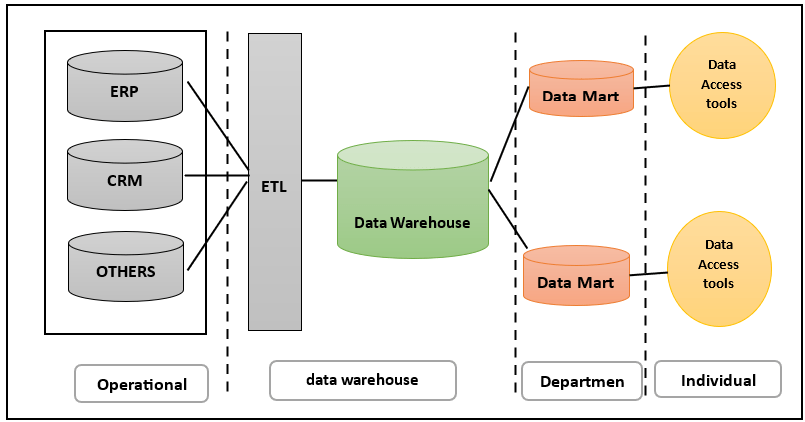
This approach emphasizes the data warehouse as a central repository that stores information at its finest level of detail. It adopts a logical framework where Data Marts are created after the entire data warehouse design process is completed.
Key characteristics of this approach include,
- Subject-Oriented
Data in the data warehouse is well-organized, focusing on subject areas, and elements are interconnected and related to specific objects or topics.
- Time-Variant
Any changes or modifications made to the database are diligently monitored and recorded. This historical tracking enables the generation of reports over time, supporting trend analysis.
- Non-Volatile
Data within the data warehouse is static and read-only. It cannot be further deleted or altered and is retained primarily for reporting purposes, ensuring data integrity.
- Integrated
Data from various sources is harmonized and made consistent within the data warehouse, providing a unified and coherent view of information.
In summary, this approach places a strong emphasis on structured and well-organized data warehousing, enabling subject-oriented, time-variant, non-volatile, and integrated data management. It ensures that data is readily available for reporting and analysis while maintaining data integrity and consistency.
DATA WAREHOUSE
Electronic Health Records (EHR) and conceptual model
Electronic Health Records (EHR) Infrastructure and Conceptual Model for Healthcare Resource Optimization and Patient Treatment Analysis
In Italy, the development of Electronic Health Records (EHR) systems is managed at the regional level, with each regional administration responsible for its own implementation. However, to ensure interoperability between these local EHR solutions, a national project known as InFSE (EHR technological infrastructure) was initiated by the Department for the digitization of Public Administration and Innovation Technology in collaboration with the Department of Information and Communication Technologies of the National Research Council (CNR).
InFSE Project
The InFSE project aimed to create an interoperable EHR national infrastructure. It defined a set of technological requirements to ensure that local EHR systems could communicate effectively. The key components of the InFSE project include,
- Notification of clinical events to local EHR systems through a publish-subscribe pattern.
- Archiving clinical documents generated during clinical events with a focus on persistency, security, and reliability.
- Structuring clinical documents using the HL7 CDA (Clinical Document Architecture) Release 2 standard for semantic interoperability.
- Managing descriptive metadata for documents to facilitate retrieval and localization.
CONTsys Standard
To simplify the relationship between documents produced in different clinical events and to facilitate sharing, a higher level of document aggregation and classification schema was introduced. These concepts were defined in the CONTsys standard (EN 13940, 2007) and describe different aspects of clinical and organizational processes, including health issues, contacts, and episodes of care. They play a crucial role in information management, healthcare delivery, and ensuring continuity of care.
EHR Conceptual Model
These concepts, as defined in the CONTsys standard, were the basis for the EHR conceptual model, which was mapped onto the HL7 Reference Information Model (RIM). The RIM serves as the backbone for representing clinical documents and is used as a standard for defining the structure of messages exchanged between heterogeneous information systems to achieve semantic interoperability.
The main class in this conceptual model is the “Contact,” representing an encounter between a patient and a healthcare provider. Each contact is associated with one or more “Episodes of Care,” which, in turn, are related to one or more “Health Issues” experienced by the patient. During a contact, healthcare providers produce clinical documents. This conceptual model forms the foundation for a region wide EHR system, such as LuMiR, and enables the comprehensive representation of patient encounters and care processes.
Relevance for Healthcare Resource Optimization and Patient Treatment Analysis
This EHR infrastructure and conceptual model offer a structured approach to capturing, storing, and retrieving patient-related data. The rich data captured in EHRs can be harnessed to support healthcare resource optimization and patient treatment analysis. Relevant indicators derived from this model can be used for secondary purposes, such as comparing different healthcare phenomena over time and across regions. It provides the necessary data foundation for informed decision-making, improving patient care, and optimizing resource allocation within the healthcare system.
Data Sources (Top of FormData set)
In the context of research on healthcare resource optimization and patient treatment analysis, the integration and analysis of data from various healthcare systems play a critical role in generating valuable insights. Here’s how the different healthcare information systems, including Hospital Information System (HIS), Electronic Health Records (EHR), Picture Archiving and Communication System (PACS), Laboratory Information System (LIS), Pharmacy Information System, and Billing and Financial Systems, contribute to the dataset
- Hospital Information System (HIS)
- HIS systems provide essential administrative and operational data, such as patient admissions, discharges, transfers, and bed management. This data is invaluable for optimizing resource allocation within the hospital, managing patient flows, and ensuring efficient bed utilization. It also contributes to financial analysis by tracking billing and insurance-related information.
- Electronic Health Records (EHR)
- EHR systems serve as the primary source of clinical data, storing comprehensive patient health information, medical histories, diagnoses, treatments, and medications. EHR data is fundamental for patient treatment analysis, offering insights into individual patient health profiles, treatment outcomes, and medical histories.
- Picture Archiving and Communication System (PACS)
- PACS systems manage medical images, such as X-rays, MRIs, and CT scans. These images are essential for diagnosing and monitoring patients. Integrating PACS data with other clinical information allows for a holistic view of patient health and supports optimized treatment decisions.
- Laboratory Information System (LIS)
- LIS systems store and manage laboratory test results, including blood tests, cultures, and pathology reports. These results provide critical clinical data that aids in diagnosing and treating patients. Analyzing this data can help identify trends and patterns in laboratory results and their impact on patient care.
- Pharmacy Information System
- Pharmacy Information Systems handles medication-related data, including medication dispensing, prescription records, and medication administration. This data is crucial for understanding patients’ medication histories, adherence to treatment plans, and potential drug interactions. It contributes to optimizing medication regimens for individual patients.
- Billing and Financial Systems
- Billing and financial systems in healthcare include patient billing, insurance claims, and financial records related to patient care and hospital operations. These systems offer insights into the financial aspects of healthcare services, including the costs associated with patient treatments and resource utilization.
In the context of healthcare resource optimization and patient treatment analysis, the dataset created by integrating data from these diverse healthcare systems provides a comprehensive and multidimensional view of patient care, resource allocation, and financial aspects. Researchers can leverage this dataset to develop analytical models and algorithms to optimize resource allocation, enhance patient care, and improve the overall efficiency of healthcare operations.
Data Mining for data warehouse
- Data mining in healthcare is the process of extracting knowledge and valuable information from large and diverse datasets. Its main objective is to uncover hidden trends, patterns, and knowledge within the data. In the context of your research, data mining serves as the engine that drives decision-making processes in healthcare.
Designing a Data Warehouse Architecture for Healthcare Resource Optimization and Patient Treatment Analysis
- 1. Data Sources
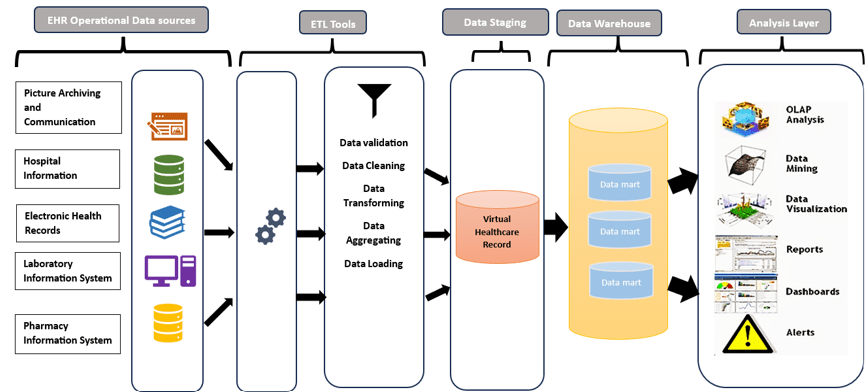
- In this architecture, data originates from various healthcare sources, including Electronic Health Records (EHRs), Laboratory Information Systems (LIS), Picture Archiving and Communication Systems (PACS), and other legacy systems. These sources contain a wealth of clinical and administrative information related to patient care.
- Data Staging Area – Operational Data Store (ODS)
- A critical component of this architecture is the Operational Data Store (ODS), acting as a staging area where raw data from diverse sources is integrated. The ODS ensures data integrity and consistency before it enters the data warehouse. It contains detailed, structured clinical documents, metadata for document indexing, and data extracted from EHRs, HL7 CDA documents.
- The ODS includes two inter-related systems:
- EHR Repository: This contains structured clinical documents and manages metadata for indexing clinical documents stored in relevant repositories.
- Virtual Healthcare Record (VHR): It manages data extracted from documents contained in EHR repositories, parsing HL7 Clinical Document Architecture (CDA) documents.
- ETL Process
- Extract, Transform, Load (ETL) tools are used to feed the data warehouse and data marts with already integrated data. Data integration does not require extensive transformation due to a shared message model, simplifying the process.
- Data Warehouse and Data Marts
- The data warehouse follows an On-Line Analytical Processing (OLAP) approach to store integrated data. It includes both data warehouse databases and data marts, each designed for specific analysis and reporting needs. The data warehouse architecture incorporates a star schema, with fact tables containing measures like resource utilization, patient treatment outcomes, and diagnostic data, and dimension tables providing context and attributes.
- Hierarchical Event Manager (InFSE)
- The Hierarchical Event Manager plays a crucial role in real-time notification of clinical data and documents. It facilitates data integration between different EHR systems and feeds both the data warehouse and data marts. Using a publish-subscribe paradigm, this component ensures that relevant clinical events are collected and stored for analysis. It also supports the development of dashboards based on business processes and clinical indicators.
- Data Analysis Layer
- This layer is equipped with data analysis tools and techniques, including data mining, reporting, and OLAP tools. These tools are employed to define a set of clinical indicators for healthcare resource optimization and patient treatment analysis.
- Integration of Clinical Information
- Confidential clinical information managed by the EHR/VHR can be integrated with other data types, such as social, demographic, and economic data, to gain a comprehensive view of patient health and resource utilization.
- Anonymization
- To preserve patient privacy, confidential information exchanged between the ODS and the data warehouse is anonymized.
This architecture offers a holistic approach to healthcare resource optimization and patient treatment analysis. It integrates data from various healthcare sources, ensuring data quality and consistency in the ODS. The data warehouse and data marts enable in-depth analysis, and the Hierarchical Event Manager supports real-time data notification. Clinical information is combined with other relevant data types, and data analysis tools help define clinical indicators for informed decision-making in healthcare resource optimization and patient treatment. The architecture focuses on maintaining data integrity and patient privacy throughout the process.
SCHEMA
In the context of research on healthcare resource optimization and patient treatment analysis, a data warehouse methodology is essential for organizing, processing, and extracting valuable insights from healthcare data.
Data Warehouse Concept
A data warehouse serves as the foundation for this methodology. It is a comprehensive technology that enables key stakeholders in healthcare, including administrators, clinicians, and researchers, to access and analyze the required information within the enterprise. The data warehouse encompasses all enterprise information, making it a valuable resource for research and analysis.
Schema Selection
In this methodology, the data warehouse utilizes the star schema to structure the data for analytical purposes. The star schema simplifies the modeling of data by dividing it into two main components AS fact tables and dimension tables.
- Fact Tables
Fact tables are central to the data warehouse, as they contain the measures that directly address the research objectives. In the context of healthcare resource optimization and patient treatment analysis, these measures could include data related to patient treatments, outcomes, resource utilization, and financial aspects. For instance, payment amounts, arrears, call counts, and sales data are part of the fact table. It’s important to note that fact tables may contain duplicate records, which is acceptable for analytical purposes.
- Dimension Tables
Dimension tables provide the context and attributes surrounding the measures in the fact table. In the healthcare domain, these dimension tables could include patient attributes, location attributes, healthcare provider attributes, and more. These attributes allow researchers to slice and dice the data based on various criteria, such as patient demographics, treatment facilities, or provider characteristics.
Analytical Framework
The selected star schema forms the analytical framework. This framework is designed to support research on healthcare resource optimization and patient treatment analysis. It simplifies data access and analysis by offering a clear and structured view of the data.
Why Star Schema?
The Star Schema is a popular and widely used design approach for structuring data warehouses, and it offers several advantages that make it a preferred choice for many organizations. Here are some key reasons why the Star Schema is commonly used in data warehouse design.
- Simplicity and Ease of Understanding
Star Schemas are simple and intuitive to understand.
- Query Performance
Star Schemas are optimized for query performance.
- Scalability and flexibility
Star Schemas are highly scalable. New dimensions or facts can be added to the data warehouse without major structural changes.
- Better Performance for Aggregated Data
Star Schemas are excellent for aggregating data, which is a common requirement for reporting and analytics.
- Data Integrity
With well-defined relationships between the Fact Table and Dimension Tables, it’s easier to enforce referential integrity constraints.
Methodological Approach
- Data Integration
The methodology begins with the integration of data from various healthcare sources, such as Electronic Health Records (EHR), Hospital Information Systems (HIS), and Laboratory Information Systems (LIS). These sources provide a rich dataset that can be used for resource optimization and patient treatment analysis.
- Data Transformation
Data is transformed and cleansed to ensure consistency and reliability. This step may involve data enrichment, harmonization, and aggregation to create a unified dataset.
- Schema Design
The star schema is employed to organize the data into fact and dimension tables. Measures related to resource optimization, patient treatment, and outcomes are stored in fact tables, while dimension tables provide context and attributes.
- Data Loading
Data is loaded into the data warehouse, and fact tables may contain duplicate records for analytical purposes.
- Analysis and Optimization
Researchers and analysts use the data warehouse to perform descriptive, predictive, diagnostic, and prescriptive analyses. They explore historical data, forecast trends, diagnose issues, and prescribe optimal resource allocation and patient treatment strategies.
By following this data warehouse methodology, researchers can effectively utilize the healthcare data to optimize resource allocation, enhance patient treatments, and improve healthcare outcomes. It provides a structured approach to data management and analysis, making it a powerful tool for healthcare research and decision-making.
In the context of research on healthcare resource optimization and patient treatment analysis, the information provided can be adapted and explained as follows.
Data Warehouse Schema
- In this design for healthcare resource optimization and patient treatment analysis, the research employs a star schema in the data warehouse. This schema comprises two fact tables and several associated dimension tables.
Dimension Tables
- In this research, dimension tables play a crucial role in providing context and attributes for comprehensive analysis. These dimensions include.
| Dimension Tables | Description | |
| 1 | DimPatient | Store information about patients. |
| 2 | DimPhysician | Store descriptive information about physicians. |
| 3 | DimMedicine | Store descriptive information about medicines, drugs, or pharmaceuticals. |
| 4 | DimProcedure | Store descriptive information about medical procedures, surgeries, treatments |
| 5 | DimLocation | Store descriptive information about various physical or geographical locations |
| 6 | DimDate | Store information related to dates and time, allowing for the analysis and reporting of data |
Surrogate Keys (SKs)
- The use of surrogate keys (SKs) is critical in maintaining data integrity in the data warehouse. SKs are unique integer values assigned to each row in dimension tables. They help protect the data warehouse from unexpected administrative changes and facilitate updates, inserts, and tracking of changes in dimensions.
Hierarchies
- Hierarchies, such as those involving dates (quarter and month) and time (hour, minute, second), allow for more in-depth analysis and reporting for healthcare events. They provide a structured way to navigate and explore data.
- There are only two possible hierarchies being identified in this Datawarehouse.
- Date Hierarchy
Year à Month àDay
- Location
Hospital_Name à Department_Name àWard_NameàRoom_NumberàBed_Number
Type 1 Slowly Changing Dimensions (SCDs)
- The research primarily employs Type 1 SCDs in most of the dimensions. This means that changes in dimension attributes overwrite existing data rather than preserving historical records. It simplifies the dimension management process.
Fact Table – FactPatientEncounter and FactMedicationAdministration
- These two fact tables are core of the analytical system FactPatientEncounter and FactMedicationAdministration which contains five essential measures relevant to healthcare resource optimization and patient treatment analysis.
ETL and OLAP
- Data from various sources, such as Electronic Health Records (EHRs), are loaded into the data warehouse through Extract, Transform, Load (ETL) processes. The data is then processed and organized into a multidimensional cube, enabling the use of OLAP (On-Line Analytical Processing) for slicing, dicing, roll-up, drill-down, and pivot analysis.
Healthcare Focus
- While the example used in the research references loans and collections, the adaptation for healthcare resource optimization and patient treatment analysis aligns the dimensions and fact table with relevant healthcare entities and measures. For instance, DimCustomer could represent patients, DimUser could represent healthcare professionals, and DimProduct could represent healthcare services or treatments.
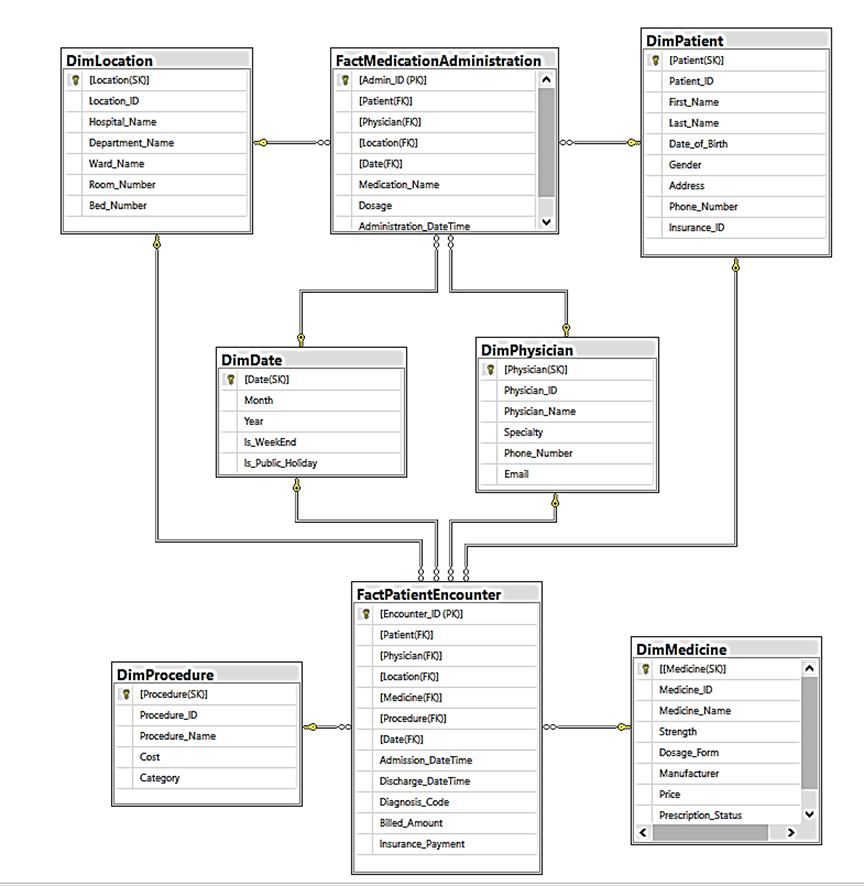
In summary, this data warehouse schema is applied to healthcare data to analyze patient interactions, healthcare staff responses, financial aspects, and treatment effectiveness. The dimension tables and measures are adjusted to cater to the specific needs of healthcare resource optimization and patient treatment analysis. The use of SKs, hierarchies, and Type 1 SCDs ensures data integrity and historical tracking in the healthcare context.
ETL – The Extract, Transform, Load process.
The Extract, Transform, Load (ETL) process is a crucial component of the data warehouse architecture for research on healthcare resource optimization and patient treatment analysis. In the context of this research, ETL performs the following functions.
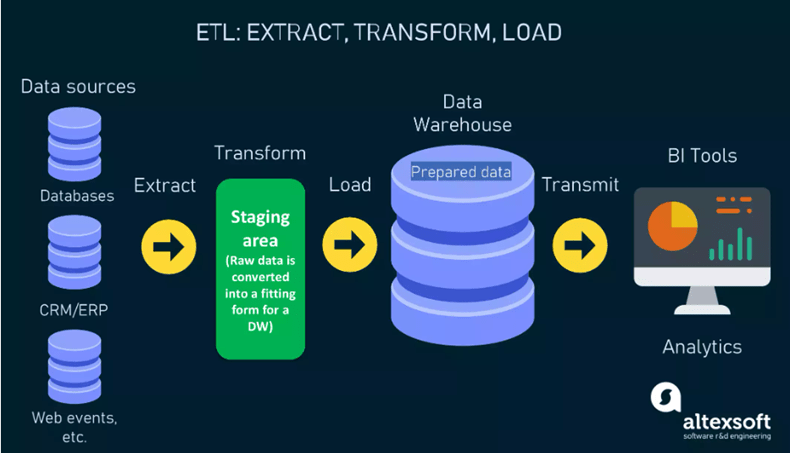
- Extract
- Data is extracted from various source systems. In healthcare, these sources could include Electronic Health Records (EHRs), administrative systems, medical imaging systems, IoT devices, and more.
- Data may come in various formats, including structured data from databases and unstructured data from sources like web servers, emails, and images.
- Extracted data is brought together into a staging area, acting as an intermediary step before loading into the data warehouse. This staging area collects data from multiple sources into a common format.
- Transform
- The transformation stage involves applying various rules and operations to the data before loading it into the destination data warehouse.
- Common transformation tasks in the healthcare context may include data cleaning, validation, data type conversion, deriving new columns, and performing calculations.
- Data may also be filtered, sorted, and pivoted to align it with the requirements of the healthcare analytics process.
- Transformations help ensure data quality, consistency, and readiness for analysis. It also resolves conflicts and discrepancies between different source systems.
- Load
- The final stage is the loading of transformed data into the destination data warehouse. For healthcare research, this destination is the data warehouse specifically designed for resource optimization and patient treatment analysis.
- Loading may involve inserting, updating, or deleting data in the data warehouse, depending on the requirements.
- Error handling and logging are integral parts of this stage. It’s important to identify and handle any issues that may arise during the loading process.
- Once the data is successfully loaded, notifications can be sent to administrators or users, indicating the availability of fresh data for analysis.
Choice of ETL Tool
- The research has chosen Microsoft BI SQL Server Integration Services (SSIS) as the ETL tool. SSIS is a powerful and widely used ETL tool that facilitates the extraction, transformation, and loading of data. It provides a user-friendly interface to design and schedule ETL workflows.
Automation and Scheduling
- Automation is a key benefit of using ETL tools like SSIS. By creating ETL packages and defining schedules, tasks can be executed automatically at specified intervals. This automation ensures that data is regularly updated and available for analysis without manual intervention.
Notification
- As part of the ETL process, notifications can be set up to inform administrators or users when specific tasks are completed, or in case of any issues during data loading.
In the context of healthcare resource optimization and patient treatment analysis, the ETL process is vital for collecting and preparing data from diverse sources, ensuring data quality, and making it available for analytical purposes. It enables healthcare professionals and administrators to access valuable insights and make informed decisions based on the data stored in the data warehouse.
In the context of research on healthcare resource optimization and patient treatment analysis, analysis and reporting play a critical role in deriving actionable insights and facilitating informed decision-making. Let’s adapt the concepts from your provided example to explain how analysis and reporting can be applied in healthcare research.
Analysis
Analysis Techniques
Use various data analysis techniques, such as statistical analysis and predictive analysis, to identify correlations, predict patient outcomes, and optimize resource allocation.
perform predictive analysis to forecast patient admission rates or diagnostic trends Data analysis in healthcare research involves the process of examining and interpreting healthcare data to discover valuable information for the purpose of improving resource allocation and patient treatment strategies. Some key aspects of data analysis include.
- Descriptive analysis can be applied to assess historical patient admission and discharge trends, resource utilization, and patient demographics, helping healthcare organizations make data-informed decisions.
- Predictive analysis can be applied to predict patient readmissions, disease prevalence, and equipment maintenance needs, allowing healthcare providers to allocate resources efficiently and improve patient outcomes.
- Diagnostic analysis can be used to investigate the reasons behind high readmission rates, delays in patient treatment, or resource shortages, enabling healthcare organizations to address underlying issues.
- Prescriptive analysis can be applied to optimize appointment scheduling, treatment plans, and resource allocation, allowing healthcare organizations to provide the best possible care while managing resources efficiently.
Clinical Indicators
Focus on identifying clinical indicators relevant to healthcare, similar to the financial indicators in your example. These could include process indicators (e.g., appointment adherence rates), intermediate outcome indicators (e.g., glycated hemoglobin levels), and final outcome indicators (e.g., readmission rates).
SSAS (SQL Server Analysis Services)
Utilize tools like Microsoft SQL Server Analysis Services (SSAS) to perform multidimensional data analysis. SSAS provides OLAP (Online Analytical Processing) capabilities for creating sophisticated healthcare analytics models. It can be used to design cubes for multidimensional analysis of your healthcare data.
Data Exploration
Explore the healthcare data within your data warehouse to understand the patterns, trends, and anomalies. This can include examining patient demographics, treatment outcomes, resource utilization, and more.
Reporting
Effective reporting in healthcare research is crucial for communicating findings and insights to healthcare professionals, administrators, and policymakers. It involves presenting information in an understandable and actionable manner. Here’s how reporting applies to healthcare research.
- Dashboards
Similar to the use of Excel pivot charts in your example, healthcare research can leverage visualization tools like PowerBI, Tableau, or custom dashboards to create interactive and user-friendly reports. These dashboards can display data on resource utilization, patient outcomes, and other relevant metrics.
Dashboard Components
Create dashboard components that address various aspects of healthcare resource optimization and patient treatment analysis. These components could include sections like “Patient Demographics,” “Resource Utilization,” “Treatment Outcomes,” and others, similar to the example’s “Arrears Amount” and “Response Per Call” sections.
- Performance Metrics
Reporting should include key performance metrics related to healthcare resource optimization and patient treatment. Metrics might include patient wait times, resource utilization efficiency, readmission rates, and treatment success rates.
- Time-Based Reporting
Time-based reporting, as shown in your example, can help identify patterns in patient behavior or resource needs over time. It may include hourly, daily, weekly, or seasonal analyses to optimize resource allocation during peak demand.
- Demographic and Clinical Insights
Reporting should break down data by demographic factors (e.g., age, gender) and clinical characteristics (e.g., diagnosis, treatment type). This helps in tailoring patient treatment strategies and optimizing resource allocation for different patient groups.
- Recommendations
Reporting can also provide actionable recommendations based on the analysis results. For example, it might suggest changes in resource allocation, staffing levels, or treatment protocols to improve patient outcomes and resource efficiency.
- Visualization Types
Choose appropriate visualization types, such as charts, graphs, tables, and pivot charts, to represent healthcare data. For instance, you might use line charts to track treatment outcomes over time or pie charts to display demographic information.
- Annotations and Explanations
Include annotations and explanations within the dashboard to guide users in interpreting the data correctly. This is particularly important in healthcare, as medical terminology and clinical indicators can be complex.
- Key Performance Metrics
Highlight key performance metrics related to healthcare resource optimization, such as patient adherence, resource utilization efficiency, and the success of treatment protocols.
- Real-Time Update
If possible, configure the dashboard to provide real-time updates on critical healthcare data, allowing healthcare professionals to monitor the latest information as it becomes available.
- User Training
Offer training to healthcare professionals and administrators on how to navigate and utilize the healthcare dashboard effectively to inform resource allocation and patient treatment decisions.
- Feedback Mechanism
Establish a feedback mechanism to gather user input on the usability and effectiveness of the healthcare dashboard. This feedback can drive continuous improvement and refinement of the analytics platform.
- Filters and Interactivity
Incorporate filters and interactive features that allow users to drill down into specific data subsets. This interactivity enables users to focus on relevant healthcare metrics, patient groups, or timeframes.
Overall, analysis and reporting in your healthcare data warehouse aim to enhance healthcare resource optimization and patient treatment analysis by providing data-driven insights that lead to better decision-making, improved patient outcomes, and more efficient allocation of healthcare resources. This empowers healthcare providers to make informed decisions based on historical data and future predictions, ultimately improving patient care.
Calculations and Measures for healthcare operations.
Key Performance Indicators (KPIs) in a hospital system provide a way to measure and assess the performance and effectiveness of various aspects of healthcare operations. KPI calculations can help hospital administrators, clinicians, and staff make informed decisions and drive continuous improvement. Here are some common KPI calculations used in a hospital.
| Key Performance Indicator | Formula | Purpose |
| Average Length of Stay (ALOS) | Total Length of Stay / Total Number of Discharges | Measures the average duration patients spend in the hospital. |
| Patient Satisfaction Score | Measured using patient surveys and feedback, typically on a scale from 1 to 5 or 1 to 10 | |
| Readmission Rate | (Number of Readmissions / Total Discharges) * 100 | Measures the percentage of patients who are readmitted to the hospital within a specific time frame after their initial discharge. |
| Bed Occupancy Rate | (Total Inpatient Days / (Number of Beds * Number of Days)) * 100 | Measures how efficiently hospital beds are utilized. |
| Emergency Department (ED) Wait Time | Average time patients spend waiting in the ED before receiving care | |
| Operating Room (OR) Utilization Rate | (Total OR Minutes Used / Total Available OR Minutes) * 100 | Measures the efficiency of operating room usage. |
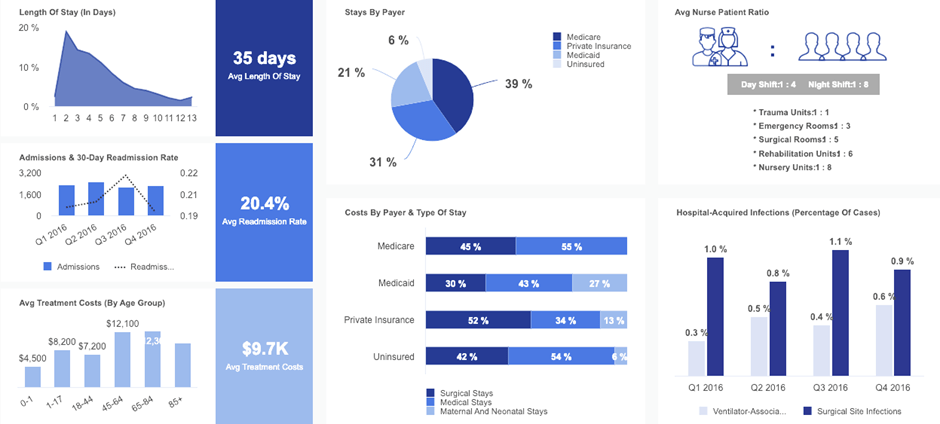
Hospital Performance Dashboard
A healthcare dashboard is a modern analytics tool to monitor healthcare KPIs in a dynamic and interactive way. A common example is a hospital KPI dashboard, that enables healthcare professionals to access important patient statistics in real-time to increase the overall hospital performance and patient satisfaction.
conclusion
In conclusion, the research on the analysis and reporting for Data Warehouse Architecture for Healthcare Resource Optimization and Patient Treatment Analysis provides valuable insights into the development and utilization of data-driven solutions within the healthcare sector. This study focuses on the critical aspects of healthcare resource optimization and patient treatment analysis, showcasing how effective data management can lead to informed decision-making and improved patient outcomes.
The research emphasizes the significance of well-structured data warehousing, as exemplified by the adoption of a star schema with surrogate keys (SKs) and Type 1 Slowly Changing Dimensions (SCDs). These architectural choices ensure data integrity, historical tracking, and efficient query performance, laying a robust foundation for healthcare analytics.
The ETL (Extract, Transform, Load) process is a pivotal component of this architecture, facilitating the seamless transfer of data from diverse sources into the data warehouse. The integration of Microsoft SQL Server Integration Services (SSIS) streamlines this process, ensuring data accuracy and accessibility. Through a well-designed ETL process, the research demonstrates how healthcare data can be harmonized and made ready for analysis.
The heart of this research lies in data analysis and reporting. It underscores the importance of leveraging data analysis techniques, such as text analysis, statistical analysis, predictive analysis, diagnostic analysis, and prescriptive analysis. By employing Microsoft SQL Server Analysis Services (SSAS), the study delivers a framework that empowers healthcare professionals and administrators to make informed decisions based on historical data and predictive insights.
Moreover, the research acknowledges the vital role of reporting in healthcare data analysis. The use of tools like Excel, Power BI, SQL Server Reporting Service, and Tableau allows for the effective communication of complex healthcare insights in an understandable and actionable manner. Through the creation of dashboards and pivot charts, healthcare professionals gain access to key performance metrics, patient demographics, resource utilization data, and treatment outcomes, all aimed at optimizing resources and enhancing patient care.
The research offers practical guidance for developing data warehouses and ETL processes while also emphasizing the importance of data security and privacy to protect sensitive patient information. It encourages continuous feedback and improvement, fostering a culture of data-driven decision-making within healthcare organizations.
In conclusion, this research exemplifies the transformational impact of data-driven approaches in healthcare, enabling resource optimization and enhanced patient treatment analysis. By following the guidelines presented, healthcare institutions can harness the power of data to drive better patient outcomes, resource allocation, and overall healthcare efficiency. As technology continues to evolve, the role of data warehousing, ETL processes, analysis, and reporting will become increasingly vital in shaping the future of healthcare.
 Change to Information Technology
Leave a comment