

Contents
Introduction to Fiber Optic Technology. 2
- Explain what fiber optic technology is and how it works.
- Brief history of fiber optics and its evolution.
Comparison with Traditional Connectivity Methods. 3
- Contrast fiber optic technology with traditional copper cables in terms of speed, reliability, and data transmission capabilities.
- Discuss the limitations of older technologies in meeting current digital demands.
Impact on High-Speed Internet 4
- Detail how fiber optic technology has transformed high-speed internet connectivity.
- Include statistics and real-world examples to illustrate improvements in speed and bandwidth.
Applications Beyond Internet Connectivity. 5
- Explore other applications of fiber optics in fields like telecommunications, medical imaging, and aerospace.
- Highlight innovative uses, such as in environmental sensing and defense.
- Address the challenges in deploying fiber optic infrastructure, including cost and geographical hurdles.
- Discuss ongoing research and developments aimed at overcoming these challenges.
Future Trends and Developments. 8
- Predict future trends in fiber optic technology, such as integration with emerging technologies like 5G and IoT (Internet of Things).
- Speculate on how these trends will further transform digital connectivity.
- Summarize the pivotal role of fiber optics in shaping modern digital connectivity.
- Emphasize the importance of continued innovation in this field to meet the growing demands of the digital age.
Introduction to Fiber Optic Technology
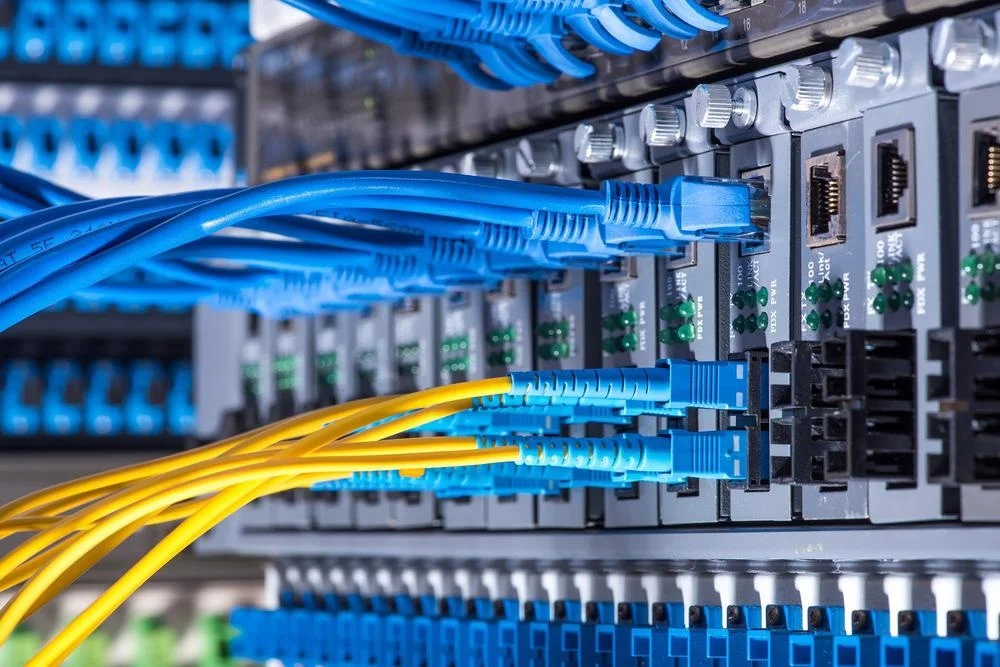
Fiber optic technology represents a significant leap forward in the field of telecommunications, fundamentally changing how we transmit information. At its core, fiber optics is the technology of transmitting data, voice, and images by the passage of light through thin, transparent fibers.
The Science Behind Fiber Optics
The technology is based on the principle of light transmission. Data is encoded onto light signals which are then sent through fiber optic cables. These cables are made from glass or plastic and are as thin as a human hair. They use total internal reflection to guide light along their length, allowing data to travel over long distances with minimal loss.
Evolution of Fiber Optic Technology
The development of fiber optics has revolutionized telecommunications. It started in the early 20th century with the basic understanding of guiding light, but it wasn’t until the 1970s that the technology became commercially viable, with the advent of lasers and improvements in the purity of glass fibers.
Advantages Over Traditional Methods
Unlike traditional copper wires, fiber optic cables can carry large amounts of data at incredibly high speeds. This is partly because light can travel more quickly than electrical signals. Moreover, fiber optics are less susceptible to interference and signal loss, providing a more reliable and stable connection.
Broad Applications
Initially used for long-distance telephone transmission, fiber optics now underpin a wide range of applications. They are the backbone of internet and cable television services, and are also used in medical instruments, mechanical engineering inspection, and in military and space applications.
Enabling High-Speed Internet
Perhaps the most impactful use of fiber optic technology is in providing high-speed internet services. In a world increasingly reliant on digital communication, the ability of fiber optics to handle vast amounts of data at high speeds is invaluable.
In summary, fiber optic technology is a cornerstone of modern communication, offering high-speed, high-capacity, and reliable data transmission. Its continued development and deployment are central to advancements in various technological and industrial sectors, underscoring its importance in our increasingly connected world.
Comparison with Traditional Connectivity Methods
Contrast fiber optic technology with traditional copper cables in terms of speed, reliability, and data transmission capabilities. Discuss the limitations of older technologies in meeting current digital demands.
The comparison between fiber optic technology and traditional copper cable methods in telecommunications reveals significant differences, particularly in terms of speed, reliability, and data transmission capabilities. Understanding these differences is key to appreciating why fiber optics has become the preferred choice for modern digital communication needs.
- Speed
- Fiber Optics
Fiber optic cables transmit data at the speed of light. They can handle bandwidths up to several terabits per second, far exceeding the capabilities of copper cables. This allows for much faster data transfer, making fiber optics ideal for high-speed internet and data-intensive applications.
- Copper Cables
Traditional copper cables, such as those used in DSL (Digital Subscriber Line) or cable internet, transmit data using electrical signals, which are slower than light signals. Typically, copper cables can manage up to a few hundred megabits per second, which, while sufficient for some uses, falls short under heavy demand.
- Reliability
- Fiber Optics
Fiber optic cables are less susceptible to environmental factors that can affect copper cables, such as temperature fluctuations, electromagnetic interference, and water damage. Fiber optics are also immune to electrical interference, which is a significant advantage in industrial environments.
- Copper Cables
Copper cables can degrade over time and are more vulnerable to environmental factors. They are also prone to electromagnetic interference from nearby power lines or high-voltage equipment, which can disrupt signal quality.
- Data Transmission
- Fiber Optics
These cables can carry data over much longer distances without significant loss of signal quality. This is because light signals degrade less over distance compared to electrical signals in copper cables. This makes fiber optics ideal for long-distance and high-capacity data transmission.
- Copper Cables
Signal loss (attenuation) and latency are more significant issues with copper cables, especially over long distances. This limits their effectiveness for long-range communication and can result in slower and less reliable connections.
- Limitations of Older Technologies
- As digital demands continue to grow, especially with the proliferation of cloud computing, streaming services, and large-scale data transfers, the limitations of copper cables become more apparent. They cannot handle the same volume of data at the same speed as fiber optics, leading to potential bottlenecks in data transmission.
- The durability and maintenance of copper cables also pose challenges. They require more upkeep and are more prone to damage and wear over time, which can lead to additional costs and disruptions in service.
In summary, while traditional copper cables have played a vital role in the development of early telecommunications, the advent of fiber optic technology has brought about a paradigm shift. Fiber optics offer superior speed, reliability, and data transmission capabilities, making them better suited to meet the growing and evolving demands of the digital era.
Impact on High-Speed Internet
Detail how fiber optic technology has transformed high-speed internet connectivity. Include statistics and real-world examples to illustrate improvements in speed and bandwidth.
Fiber optic technology has had a transformative impact on high-speed internet connectivity, setting new standards for speed, bandwidth, and reliability. This impact is evident in several key areas:
- Significantly Higher Speeds
- Fiber optic internet dramatically outpaces traditional broadband connections. While the average speed for broadband using copper lines might range from 10 to 100 Mbps (Megabits per second), fiber optic connections typically start at 250 Mbps and can go up to 1 Gbps (Gigabit per second) or more. In some cases, fiber optic networks offer speeds up to 10 Gbps, which is 100 times faster than the average broadband speed.
- Greater Bandwidth Capacity
- Fiber optics provide considerably higher bandwidth than copper cables. This means more data can be transmitted at any given time, making fiber optic networks ideal for high-demand applications like video streaming, online gaming, and teleconferencing. For instance, streaming a 4K video, which can be challenging on traditional broadband due to buffering and lag, becomes seamless with fiber optics.
- Consistent Performance with Lower Latency
- Fiber optic cables are less susceptible to latency issues compared to copper cables. Latency, the delay between sending and receiving data, is significantly reduced in fiber optics, providing a smoother and more consistent internet experience, especially important in applications like online gaming, VoIP (Voice over Internet Protocol) services, and real-time data processing.
- Enhanced Reliability
- Fiber optic cables are more reliable and less prone to outages than copper cables, as they are not affected by electromagnetic interference and are more resistant to weather conditions and physical wear and tear.
- Real-World Examples and Statistics
- Google Fiber
One of the most notable examples is Google Fiber, offering internet speeds of up to 1 Gbps, which has been a game-changer in the regions where it’s available.
- Singapore and South Korea
Countries like Singapore and South Korea, which have extensively invested in fiber optic infrastructure, consistently rank at the top in global internet speed rankings. For instance, South Korea’s average internet speed, heavily reliant on fiber optics, is around 121 Mbps, significantly higher than the global average.
- Expansion Projects
Various countries and regions are investing heavily in expanding their fiber optic networks. For example, projects like the UK’s “Fibre First” program aim to cover millions of homes and businesses with ‘full fiber’ internet connections.
In summary, the impact of fiber optic technology on high-speed internet is profound and far-reaching. It has not only improved the speed and quality of internet connectivity but also acted as a catalyst for technological innovation, enabling new digital services and applications that were not feasible with traditional broadband. The ongoing expansion of fiber optic networks is a testament to its role as a backbone for the modern digital world.
Applications Beyond Internet Connectivity
Explore other applications of fiber optics in fields like telecommunications, medical imaging, and aerospace. Highlight innovative uses, such as in environmental sensing and defense.
Fiber optic technology, while pivotal in revolutionizing internet connectivity, has a broad spectrum of applications across various fields beyond telecommunications. Its unique properties make it a versatile tool in many cutting-edge and critical areas. Here’s a look at some of these applications.
- Medical Imaging and Procedures
- In the medical field, fiber optics play a crucial role in various imaging techniques and minimally invasive surgical procedures. Endoscopy, for instance, uses fiber optic cables to transmit light into the body, allowing doctors to view internal organs without major surgery. Similarly, fiber optics are used in laparoscopy and other forms of minimally invasive surgeries for illumination and imaging.
- Aerospace and Automotive Industries
- Fiber optics are widely used in the aerospace industry for data transmission within aircraft. Their resistance to electromagnetic interference, lightweight, and high data transmission capabilities make them ideal for use in environments with complex electronic systems. In the automotive industry, fiber optics are used for onboard communications systems, safety features, and increasingly in the development of autonomous vehicles.
- Environmental Sensing and Monitoring
- Fiber optic sensors are employed in environmental monitoring due to their sensitivity and accuracy. They can be used for measuring temperature, pressure, and chemical composition in various environments, from ocean depths to urban infrastructures. These sensors are crucial in monitoring environmental conditions, detecting pollutants, and contributing to early warning systems for natural disasters like earthquakes.
- Defense and Security
- In defense, fiber optics are used for secure communication as they are less susceptible to tapping and interception compared to conventional wires. They are also employed in sophisticated weaponry and surveillance systems. For example, fiber optic gyros are used for precision guidance in missiles and other military vehicles.
- Lighting and Decorations
- The use of fiber optics in lighting and decorative applications has grown, owing to their ability to transmit light over distances with minimal loss. They are used in aesthetic installations, architectural lighting, and even in Christmas decorations, providing energy-efficient and flexible lighting solutions.
- Telecommunications
- Beyond internet connectivity, fiber optics are crucial in the broader field of telecommunications. They are used for long-distance telephone transmission, cable television, and as the backbone of networks for mobile phone and internet services. Fiber optic cables support vast amounts of data traffic that underpin the global telecommunications infrastructure.
- Industrial and Scientific Applications
- In industry, fiber optics are used for imaging and inspecting hard-to-reach areas, like inside pipelines or machinery. In scientific research, they are instrumental in spectroscopy and various other forms of sensing and imaging, contributing to advancements in fields ranging from physics to biology.
The versatility of fiber optics, characterized by their efficiency, reliability, and non-invasiveness, makes them invaluable across these diverse fields. As technology advances, we can expect even more innovative applications to emerge, further embedding fiber optics in the fabric of modern technological solutions.
Challenges and Limitations
Address the challenges in deploying fiber optic infrastructure, including cost and geographical hurdles.
Deploying fiber optic infrastructure, while offering numerous benefits, comes with its own set of challenges and limitations. The primary hurdles in the widespread adoption of fiber optics include cost, geographical constraints, and technical issues.
- High Initial Costs
- The initial investment for laying fiber optic cables is significantly higher compared to traditional copper cables. This includes the cost of the fiber itself and the labor-intensive process of installation, which often involves digging trenches and navigating underground utilities. For many service providers, especially in less densely populated areas, these costs can be prohibitive.
- Geographical and Physical Barriers
- Terrain and geographical features can pose significant challenges to fiber optic cable installation. Mountainous areas, rivers, and urban landscapes with dense infrastructure make the laying of fiber optic cables complex and costly. In remote or rural areas, the low population density may not justify the high investment, leading to a digital divide where such regions lag in high-speed internet access.
- Upgrading Existing Infrastructure
- Upgrading existing telecommunications infrastructure to fiber optics is a massive undertaking. In many urban areas, old infrastructure needs to be completely overhauled, which can be disruptive and expensive. This is particularly challenging in historic cities where digging and construction are restricted.
- Technological Challenges
- While fiber optics are less prone to interference and data loss, they are not completely immune to damage. Physical damage to cables, such as through construction work or natural disasters, can disrupt service. Repairing fiber optic cables requires specialized skills and equipment, which can be more expensive and time-consuming than fixing traditional cables.
- Market Competition and Regulatory Hurdles
- In some regions, market dynamics and regulatory issues can impede the deployment of fiber optic infrastructure. Incumbent service providers may lack the incentive to upgrade to fiber optics, especially if they already have a dominant market position with existing technology. Additionally, regulatory hurdles and right-of-way issues can delay deployment projects.
- Scalability and Flexibility Issues
- While fiber optics offer superior bandwidth, scaling the infrastructure to meet rapidly growing demands can be challenging. Upgrading capacity often requires additional physical infrastructure, as opposed to simply upgrading equipment at the end points, as is the case with some other technologies.
Despite these challenges, the demand for higher bandwidth and faster internet speeds continues to drive the expansion of fiber optic networks globally. Innovations in deployment techniques, such as micro-trenching and aerial fiber installation, are helping to mitigate some of these challenges. Moreover, as technology advances and more players enter the market, the costs are gradually coming down, making fiber optics a more accessible option for a broader range of applications.
Future Trends and Developments
Predict future trends in fiber optic technology, such as integration with emerging technologies like 5G and IoT (Internet of Things). Speculate on how these trends will further transform digital connectivity.
The future of fiber optic technology looks bright and is poised to play a pivotal role in shaping the landscape of digital connectivity. Several key trends and developments are expected to emerge, further integrating fiber optics with cutting-edge technologies like 5G, the Internet of Things (IoT), and more. Here are some predictions for the future trends in fiber optic technology.
- Synergy with 5G Networks
- Fiber optics are expected to be a backbone for the 5G networks, which require high bandwidth and low latency. The deployment of 5G technology will rely heavily on fiber optic infrastructure for backhaul connectivity to handle the increased data traffic and to ensure the reliability and speed that 5G promises.
- Expansion in IoT Applications
- As the IoT continues to grow, with more devices getting connected every day, fiber optic networks will become increasingly important in managing the large data loads. The reliability and high-speed data transmission offered by fiber optics will be crucial in supporting the real-time data needs of IoT applications, from smart cities to connected healthcare systems.
- Advancements in Fiber Optic Sensing
- Fiber optic sensors, known for their precision and sensitivity, are expected to see advancements in applications such as infrastructure monitoring, environmental sensing, and industry-specific applications like oil and gas exploration. These sensors can transmit data over long distances, making them ideal for remote monitoring.
- Improvements in Fiber Optic Cable Technology
- Future developments in the manufacturing of fiber optic cables may lead to even faster and more efficient data transmission capabilities. Innovations in cable composition and design, such as photonic crystal fibers, could allow for greater data capacity and reduced signal loss.
- Enhanced Integration in Data Centers
- With the increasing demand for cloud services, data centers are expanding rapidly. Fiber optics play a crucial role in data center operations, offering the high-speed, high-capacity connections needed. Future trends may include increased use of fiber optics for interconnectivity within and between data centers.
- Increased Accessibility and Cost Efficiency
- As technology evolves, the cost of deploying fiber optic networks is expected to decrease, making it more accessible to underserved regions. This will help bridge the digital divide, bringing high-speed connectivity to more areas around the world.
- Advancements in Quantum Computing and Communications
- Fiber optics may play a role in the development of quantum computing and quantum communications. Quantum key distribution (QKD) over fiber networks, for instance, is an area of ongoing research and holds the potential for ultra-secure communication channels.
- Green Energy Initiatives
- With a global push towards sustainability, fiber optics could be integrated more with renewable energy systems. Their use in monitoring and managing energy distribution networks, including smart grids, will likely increase.
These trends indicate that fiber optic technology will not only continue to support existing digital communication needs but also play a transformative role in new technological frontiers. The integration of fiber optics with emerging technologies like 5G and IoT will further enhance connectivity, speed, and efficiency, opening up new possibilities in virtually every sector of the digital world.
Conclusion
Summarize the pivotal role of fiber optics in shaping modern digital connectivity. Emphasize the importance of continued innovation in this field to meet the growing demands of the digital age.
In conclusion, fiber optic technology has undeniably become a cornerstone in shaping modern digital connectivity. Its unparalleled capacity for high-speed data transmission and bandwidth has not only revolutionized telecommunications but has also laid the groundwork for future technological advancements. Fiber optics offer a combination of speed, reliability, and efficiency that is unmatched by traditional connectivity methods, making them indispensable in an increasingly data-driven world.
The role of fiber optics extends beyond providing faster internet connections. It is integral to the infrastructure of 5G networks, essential in the proliferation of the Internet of Things (IoT), and plays a crucial role in various fields, including medical imaging, environmental monitoring, and aerospace. As we move towards more interconnected and smart technologies, the demand for high-speed, reliable, and extensive data transfer continues to grow, and fiber optics stand at the forefront of meeting these needs.
Continued innovation in fiber optic technology is vital. As we face challenges such as the digital divide, environmental concerns, and the ever-increasing demand for data, the evolution of fiber optics is more critical than ever. Future advancements in the efficiency, cost-effectiveness, and application of fiber optic technology will not only enhance existing digital infrastructures but also pave the way for groundbreaking developments in various sectors.
The integration of fiber optics with emerging technologies like 5G, advanced sensing, and quantum computing heralds a future of limitless possibilities. It is a future where data and connectivity play a central role in advancing human capabilities, driving economic growth, and solving complex global challenges.
In essence, fiber optics are not just a tool for today but a foundation for tomorrow. The continued focus on innovation and development in this field is essential for propelling us into the next era of digital transformation, ensuring that we can meet the growing demands of the digital age and beyond.
 Change to Information Technology
Leave a comment